
A wet floor beside the water heater is a call we hear about constantly, and the first question is always the same: where is it actually coming from? Water runs downhill and pools at the lowest point, so the puddle is often nowhere near the source. It might be the temperature and pressure relief valve or its discharge line, the drain valve near the bottom of the tank, the hot and cold connections on top, condensation on a cold tank, or a nearby pipe that has nothing to do with the heater. It might also be the tank itself, and that answer changes everything. In El Dorado Hills, CA, we trace the source before we touch a wrench.
We treat every leak like a small investigation. The technician dries everything off so fresh water shows where it starts, then checks the relief valve and its discharge line, the drain valve at the base, and every connection on top. Gas heaters get a look inside the burner area, because water there can be normal startup condensation or a sign of a tank that has failed. A relief valve that keeps releasing water means we also test pressure: static pressure above roughly 80 psi, or a missing expansion tank on a closed system, will keep a new valve weeping. Findings come first; the repair follows.
With the source confirmed, the fix is often simple. A new T&P valve, a brass drain valve in place of a weeping plastic one, fresh dielectric fittings or supply connectors, and an expansion tank or pressure-reducing valve where pressure is to blame can all be handled on the spot. A corroded tank is different. Nothing will reliably seal a rusted tank, so we explain replacement honestly and walk through the choices. Before we leave, we can add a drain pan with a drain line and a leak sensor, especially for heaters in attics, closets, or upstairs. Call (279) 242-2736 for leak repair in El Dorado Hills.
What homeowners call us about most is Water Heater Repair in El Dorado Hills and Water Heater Replacement in El Dorado Hills. Start there if you're not sure what you need.
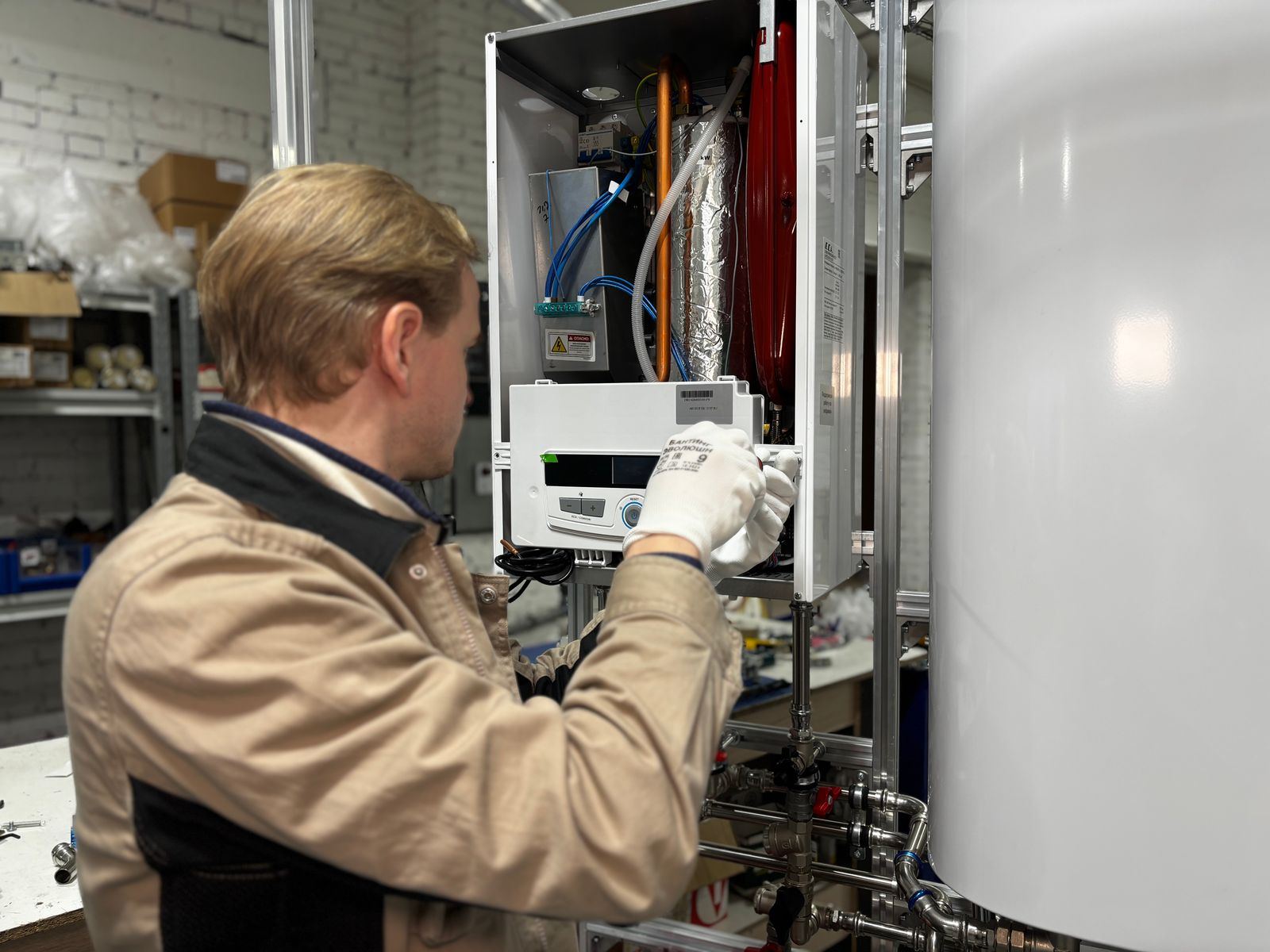
Signs You Need Water Heater Leak Repair in El Dorado Hills
Water heaters usually give plenty of warning before they fail, as long as you know what to look and listen for. Here are the most common indicators that it's time to call a professional:
- A T&P valve line that drips or releases water now and then
- A wet floor near the water heater that keeps coming back
- A drain valve at the bottom of the tank that drips even when closed
- Rust-tinted hot water and signs of seepage near the base
- The water meter moving when nothing in the house is running
- Warped baseboards or stained drywall beside the water heater
- Dampness in the combustion area of a gas unit
- Corroded pipe connections or damp flex lines above the heater
A Slow Leak Never Stays Slow
Tanks rarely fail all at once. They corrode from the inside for months, and the warning signs show up long before the floor gets wet. At the first hint of a problem, reach out to El Dorado Hills Water Heater at (279) 242-2736 and we'll take a look.
Talk to Us About Water Heater Leak Repair
We'll diagnose the problem and give you a straight answer on the fix.
Call (279) 242-2736 NowWhat Homeowners Ask Us Most
Why Hire a Professional for Water Heater Leak Repair?
Water heater leaks are easy to misread. Water pooling at the base may start at a fitting on top and run down the jacket, and condensation on a cold tank can look exactly like a failure. Buying the wrong part is money down the drain, and overlooking a tank that is starting to go can lead to a much bigger flood later. Safety is part of the picture as well. The relief valve guards the tank against runaway heat and pressure, and blocking it to stop a drip can set up a violent failure. Corroded fittings on an older tank can crack under a wrench, and electric heaters sit on 240-volt circuits that do not mix well with wet floors.
Calling a professional buys you certainty. You get the true source, the right parts, and an explanation of why it failed. When a relief valve drips, pressure and expansion get tested. When a fitting is rotten, the connection gets replaced, not cranked tighter. When condensation is the only issue, we explain it and save you a repair. And when the tank itself is leaking, we recommend replacement honestly, with a drain pan, drain line, and leak alarm to limit damage the next time around.
What to Expect From Our Team
Good water heater work comes down to a consistent routine, and ours starts with a real diagnosis instead of a guess. Here's how we handle water heater leak repair from start to finish:
Stop & Protect
We help you close the cold supply and shut off gas or power, then move valuables and set up containment so the damage stops spreading.
Trace the Source
With the surfaces dried, fresh water shows us where the leak begins, whether that is a valve, a fitting, condensation on a cold tank, or the steel itself.
Check Pressure & Expansion
We gauge household water pressure and look at expansion control, because a closed system without room to expand spikes pressure every heating cycle.
Lasting Repair
Repairs are tested, not assumed. We restore water and heat, check each joint, and suggest a drain pan or leak sensor where it would help. If the tank has failed, we explain replacement plainly.
Repair or Replace? Let's Figure It Out.
Tell us the age, fuel type, and symptoms, and we'll help you sort out the next step.
Call (279) 242-2736 TodaySimple Ways to Extend Your Water Heater's Life
Most of the failures we see could have been delayed for years with basic upkeep. Here's where to begin:
- Inspecting the anode rod periodically is one of the best ways to delay a tank leak
- Annual flushing removes sediment that traps heat against the tank floor
- Have household pressure measured, since high pressure wears out relief valves and fittings faster
- Make a habit of checking around the heater for moisture or corrosion every few weeks
- Make sure a closed plumbing system has a working expansion tank to absorb heated water
- Place the heater in a drain pan with a line to a floor drain or outdoors, especially above finished space
- Add a floor sensor or an automatic shutoff valve that closes the supply when it detects water
Should You DIY or Call a Pro?
Online videos may help in a pinch, yet lasting repairs and code-compliant installs depend on correct venting, proper relief valve discharge piping, and a trained technician. Here's how the two approaches stack up:
| Consideration | Doing It Yourself | Hiring a Pro |
|---|---|---|
| Finding the Source | Guess based on where water collects | Leak traced to its true starting point |
| Relief Valve | Valve capped to stop the drip, a serious hazard | Pressure and expansion tested, valve replaced properly |
| Old Fittings | Wrapped in tape and hoped for the best | Dielectric unions and connectors rebuilt |
| Condensation vs Leak | Unneeded parts or a whole new heater | False leaks ruled out with testing |
| Water Damage | No pan, no alarm, no plan | Shutoff labeled and leak alarms suggested |
| Result | Temporary fix that may fail again | Confirmed dry repair or honest replacement advice |
Get Water Heater Leak Repair Help Today
Get your hot water back before a small fault turns into a flooded floor. El Dorado Hills Water Heater is ready to respond fast.
Get Help: (279) 242-2736Water Heater Leak Repair Near El Dorado Hills
Wherever you are in the area, the same experienced team shows up with the same parts and the same pricing. Find your community below.